
Our Commitment to Inclusion
-
Reconciliation is an ongoing responsibility that requires action. As early learning educators we commit to the following actions:
Learning and Teaching: We will integrate age-appropriate Indigenous perspectives, stories, and teachings into our programs.
Listening and Respecting: We will seek out and honour Indigenous voices, knowledge keepers, and community resources.
Building Relationships: We will foster respectful relationships grounded in kindness, inclusion, and mutual understanding.
Taking Responsibility: We will continue to learn about the history and impacts of colonization and reflect on how we can do better.
Caring for the Land: We will teach children to respect and care for the land as an essential part of reconciliation.
-
At Happy Tots, we teach children that:
-Everyone deserves kindness, respect, and a sense of belonging
-We learn from different stories, cultures, and ways of knowing
-Taking care of each other and the land is part of being a good community member
We believe that learning these values early helps children grow into caring, respectful citizens.
-
Happy Tots is committed to reconciliation through meaningful and ongoing action. In alignment with the Truth and Reconciliation Commission of Canada’s Calls to Action, specifically Calls to Action 62 and 63, we commit to the following:
Educating for Reconciliation (TRC 62)
We incorporate age-appropriate Indigenous perspectives, stories, and learning opportunities that support understanding, respect, and inclusion.Building Understanding (TRC 63)
We continue learning about the history and legacy of residential schools and share knowledge in ways that are appropriate for early learners and families.Honouring Indigenous Knowledge
We value Indigenous ways of knowing and being, and we seek opportunities to respectfully include Indigenous voices and resources in our program.Ongoing Reflection and Growth
We recognize reconciliation as a lifelong journey and commit to listening, learning, and taking responsibility as we grow together. -
Being neurodiversity-affirming means we are working to change the environment, not the child, and honouring every brain as worthy of respect and belonging.
We follow the child’s lead as we:
Take a strengths-based approach, recognizing each child’s unique interests, skills, and ways of learning
Understand that emotional regulation is foundational to learning and prioritize regulation before expectations
Support autonomy by offering flexible learning tools, choices, and ongoing collaboration with families
Listen to lived experiences by learning from neurodivergent voices, engaging in reflection, professional development, and committing to continuous growth
Recognize that capacity can fluctuate for all children, and we adapt expectations, environments, and materials to meet each child’s needs each day
-
We believe inclusion is about belonging, where differences are celebrated, recognized, respected, and supported.
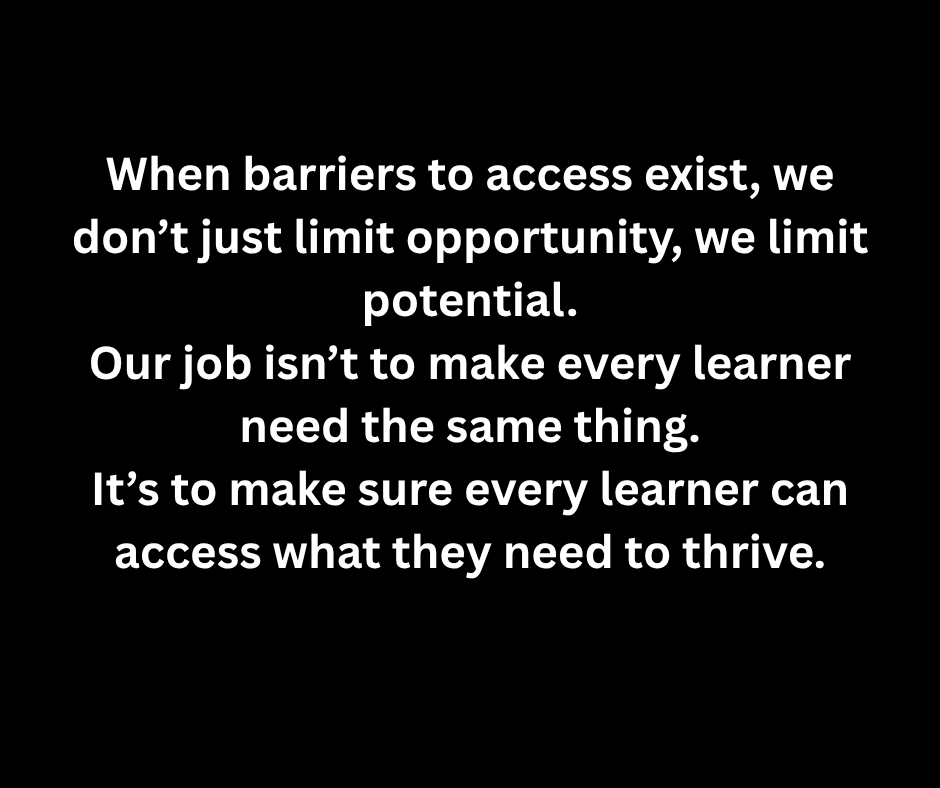
Universal Design for Learning (UDL) is a guide that helps us design our environment to be accessible and effective for all children, families, and educators
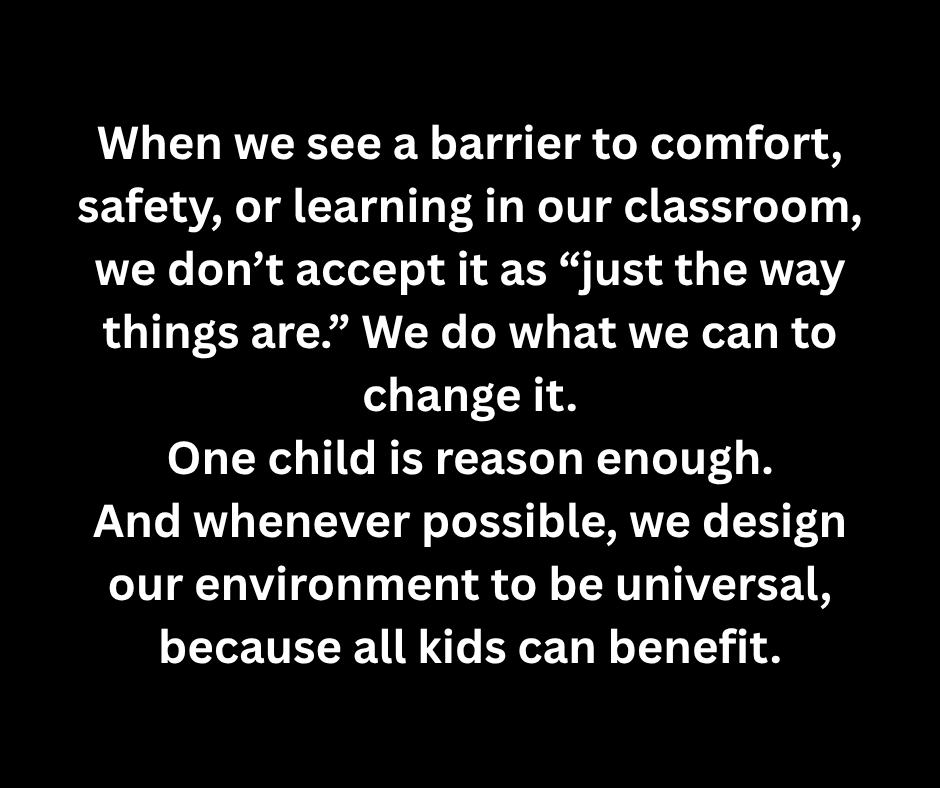
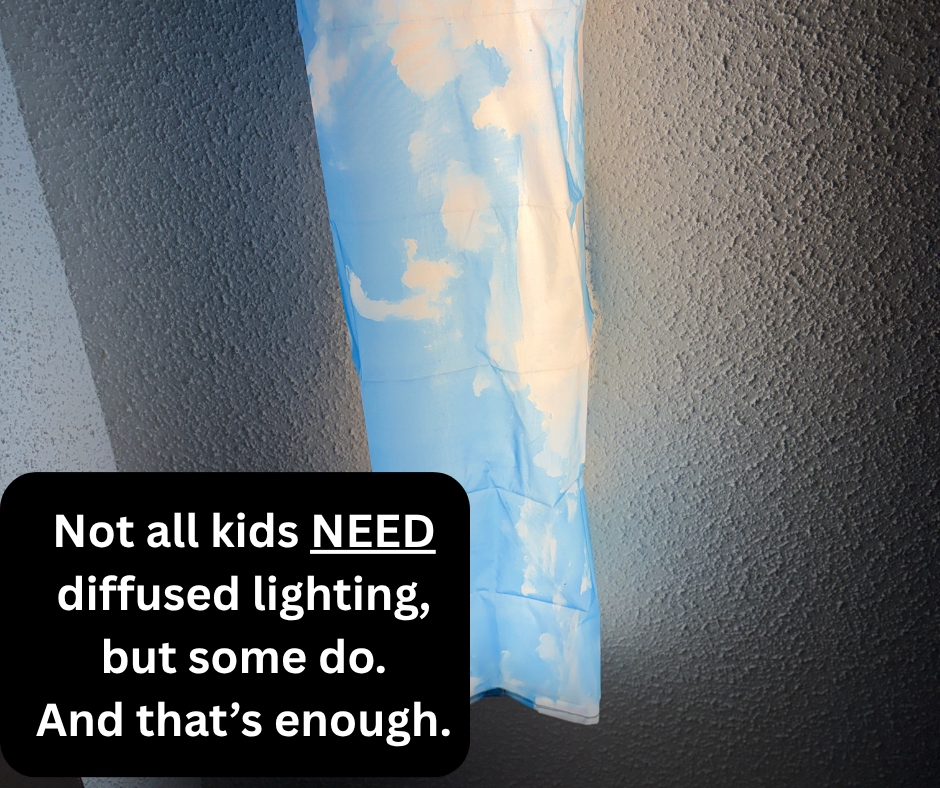
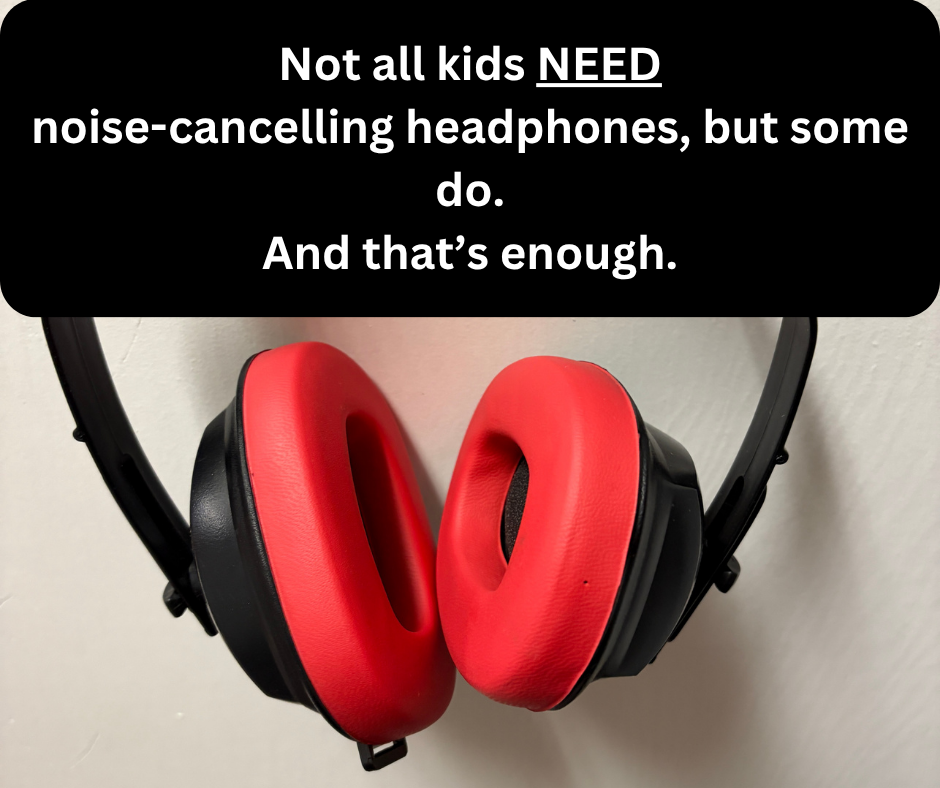
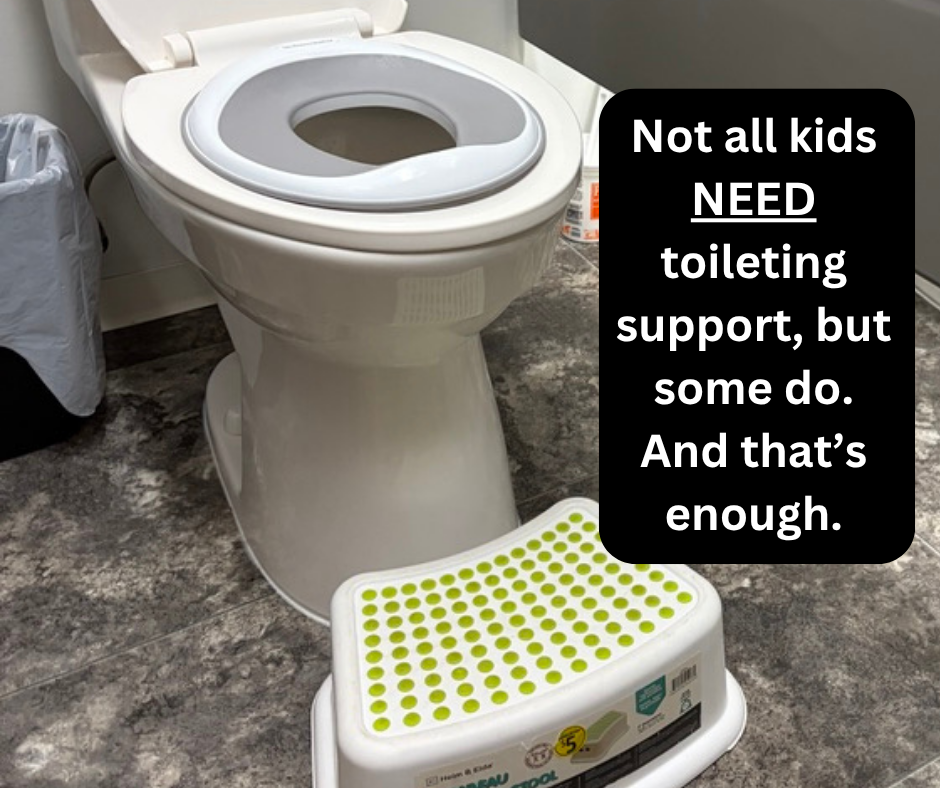
When supporting children with diverse needs, we begin with universal changes to the program and environment. These proactive adjustments help create an inclusive, effective space that consistently supports the entire group. We make adjustments as we get to know each group.
Every child uses a different approach in how they learn, process information, and make sense of the world around them. With this in mind, any changes we make to the classroom or program are viewed through a lens of access, ensuring we remove barriers rather than create them.
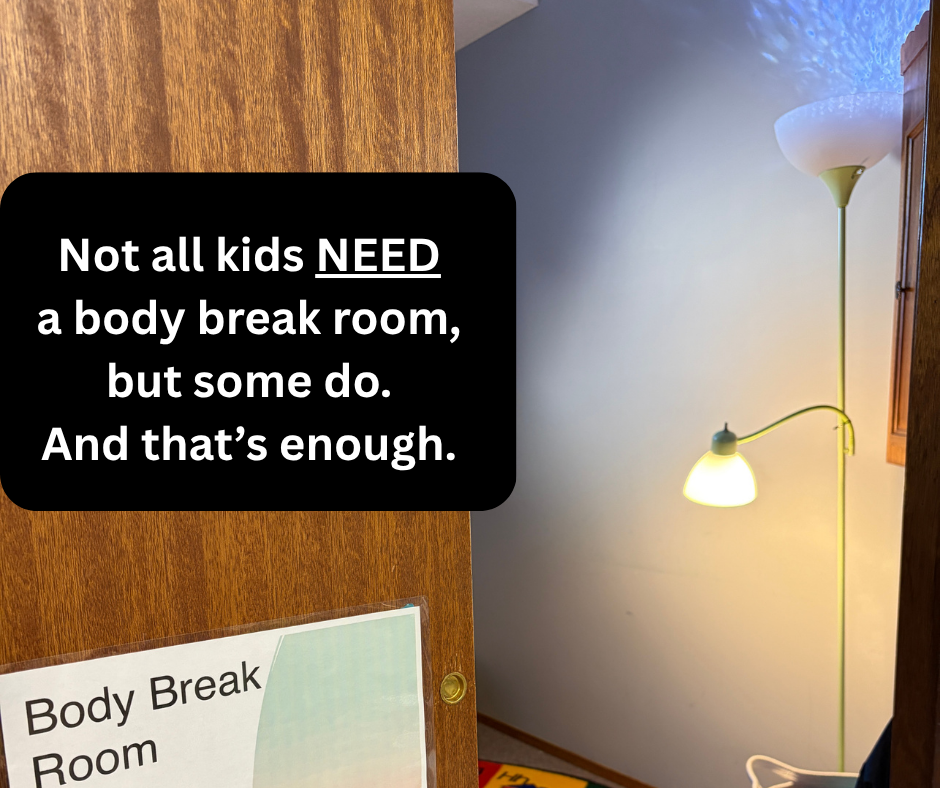
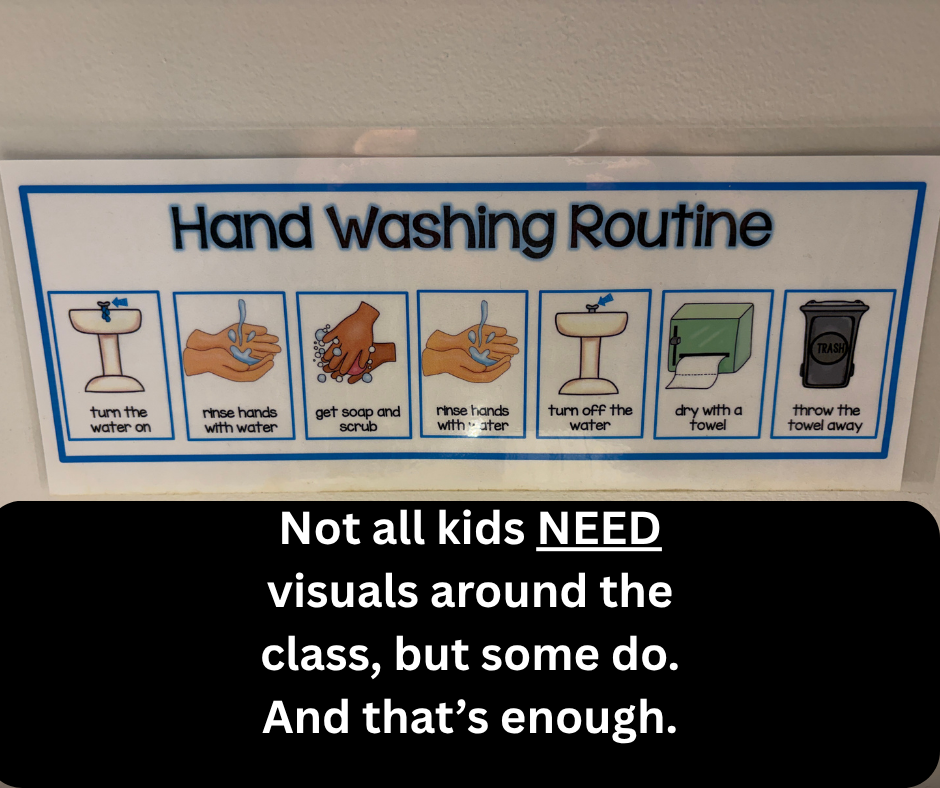
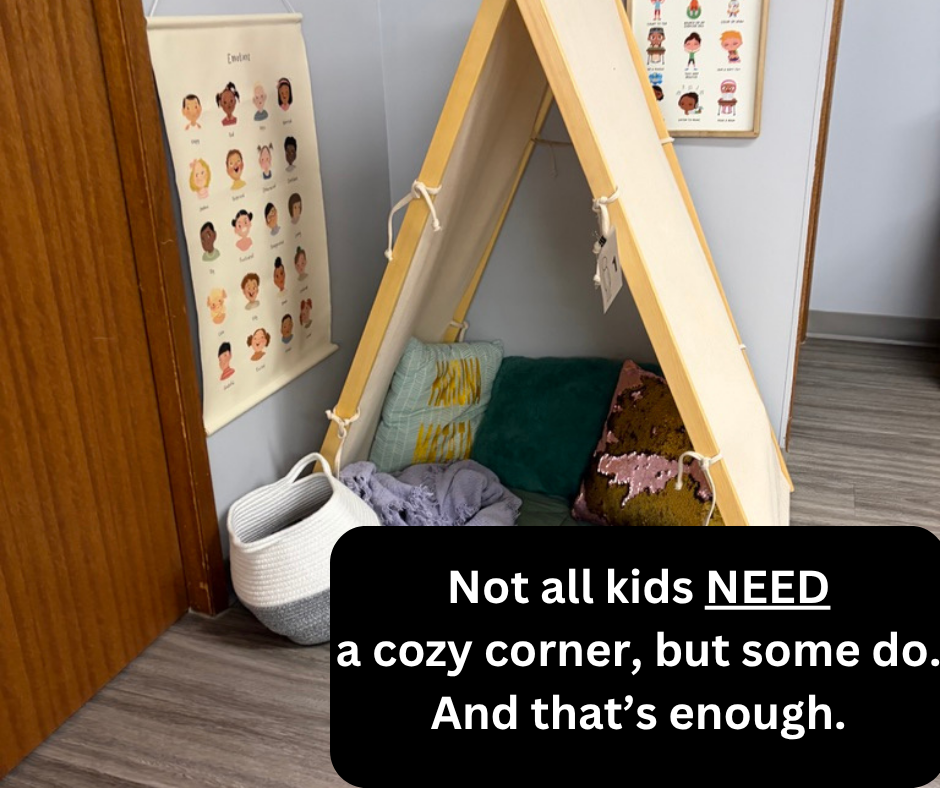
Some of these supports include open and clear pathways, visual cues for guidance, body-break rooms for big energy or one-to-one needs, cozy corners for quiet regulation, and flexible furniture that can adapt to the changing needs of the classroom.
We also lower enrolment based on classroom needs and adjust schedules to reduce transitions, allowing for more uninterrupted play and exploration.
Saying “all are welcome” without intentional planning can create challenges. Instead, we design thoughtful, well-supported classrooms from the start, using individual information about each child to guide our approach.
We value open communication with families and outside professionals, such as occupational and speech therapists. By gathering as much information as possible at the beginning of the year, we help ensure every child feels safe, supported, and understood. We continue these conversations throughout the year to ensure nothing is overlooked and that we are consistently building the right supports for each child as they grow and change.
We recognize that each child has an individual learning path, and recognizing how we fit into that path helps us to better understand where to begin. We know no one knows your child better than you, and we learn best when we learn together.
-
We believe learning never stops. We grow through relationships, by listening to families, learning from diverse voices, and collaborating with other professionals. These partnerships help us reflect, adapt, and build thoughtful supports for children and our community.
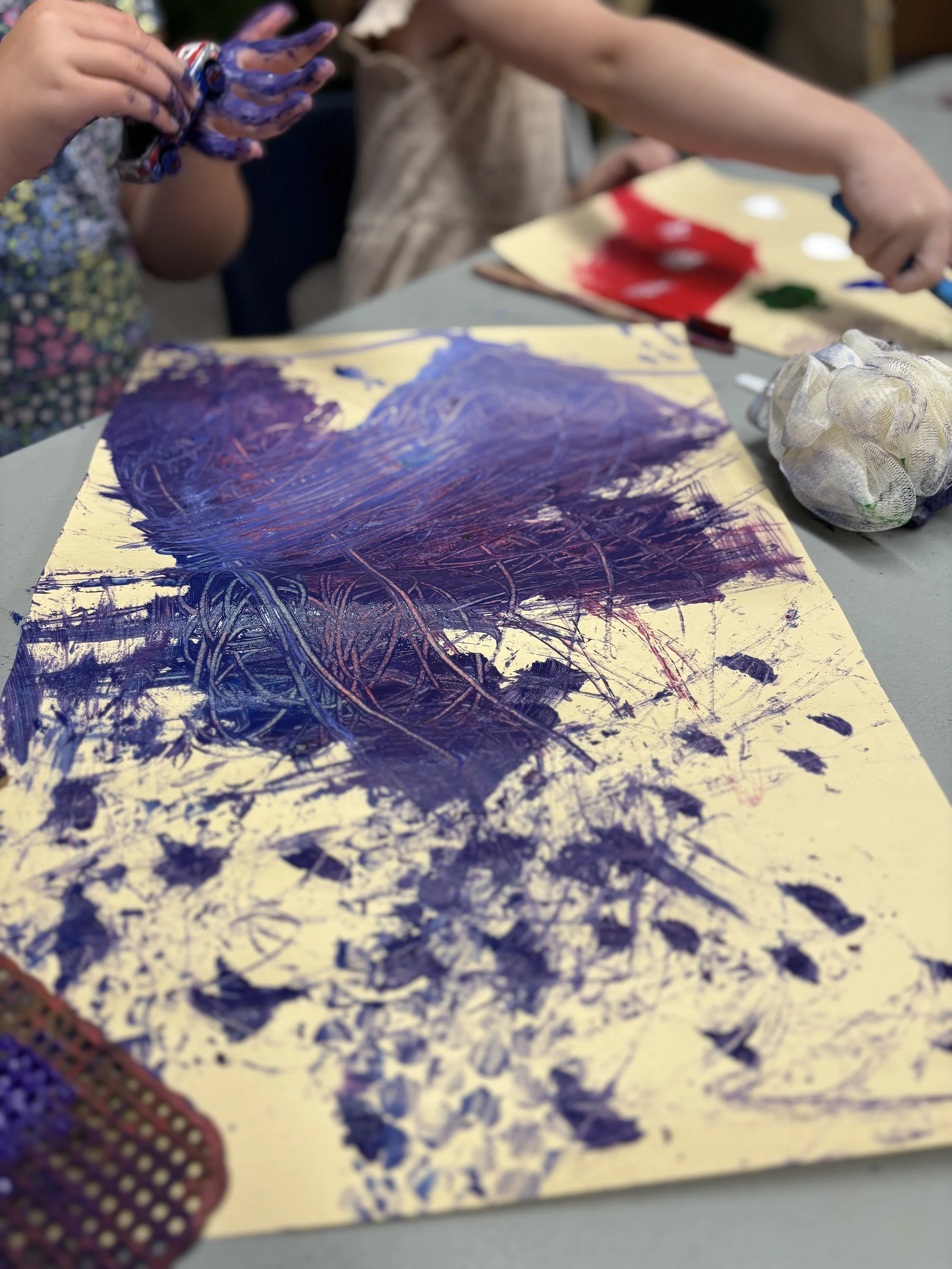
An Inclusion Access Fund at Warman Happy Tots Preschool will be used to support children with diverse learning needs. This fund aims to fill individual needs in our preschool when supporting families with children facing learning disabilities. These funds will be used to ensure they have access to any additional classroom resources, additional educators if suitable, and professional supports if possible. This may promote individual physical, cognitive and social development.
We currently support different learning needs by lowering enrolment in the classes, hiring additional staff for one-to-one support, and through additional professional development and professional partnerships.
We are a non-profit corporation.
We re-invest our profits into the business with an emphasis on curating a more inclusive classroom.
All funds sent for the Inclusion Access Fund will be used for this purpose.
If you choose to donate via etransfer, please note in the messages “Inclusion Access Fund”
Watch our website and Facebook page to see how we use the funds in the upcoming years!
Etransfers can also be sent to: happytots.earlylearning@gmail.com
You can also support the program by purchasing copies of the books written by Mrs. Smith.